

Skyscrapers
How it works
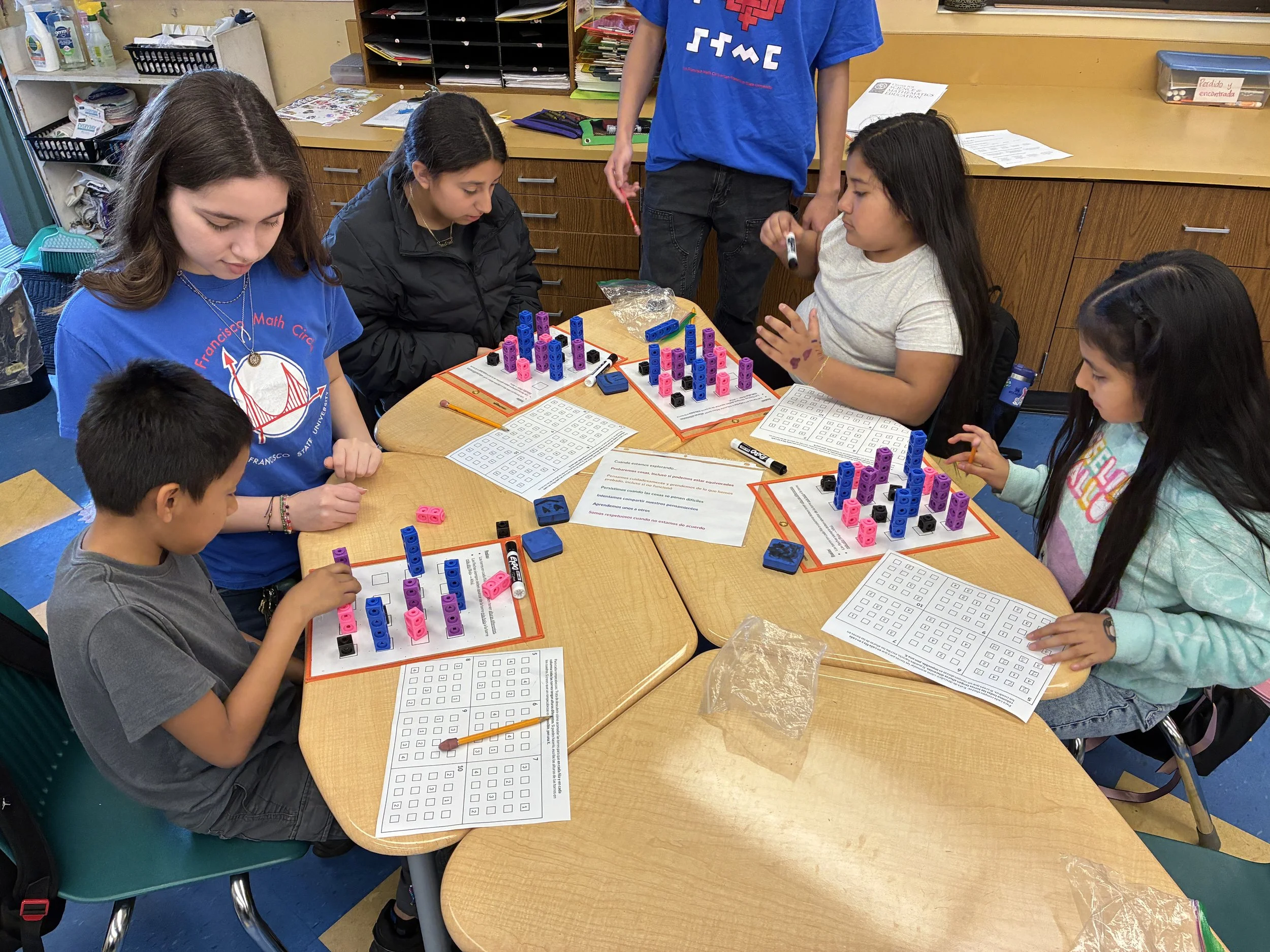
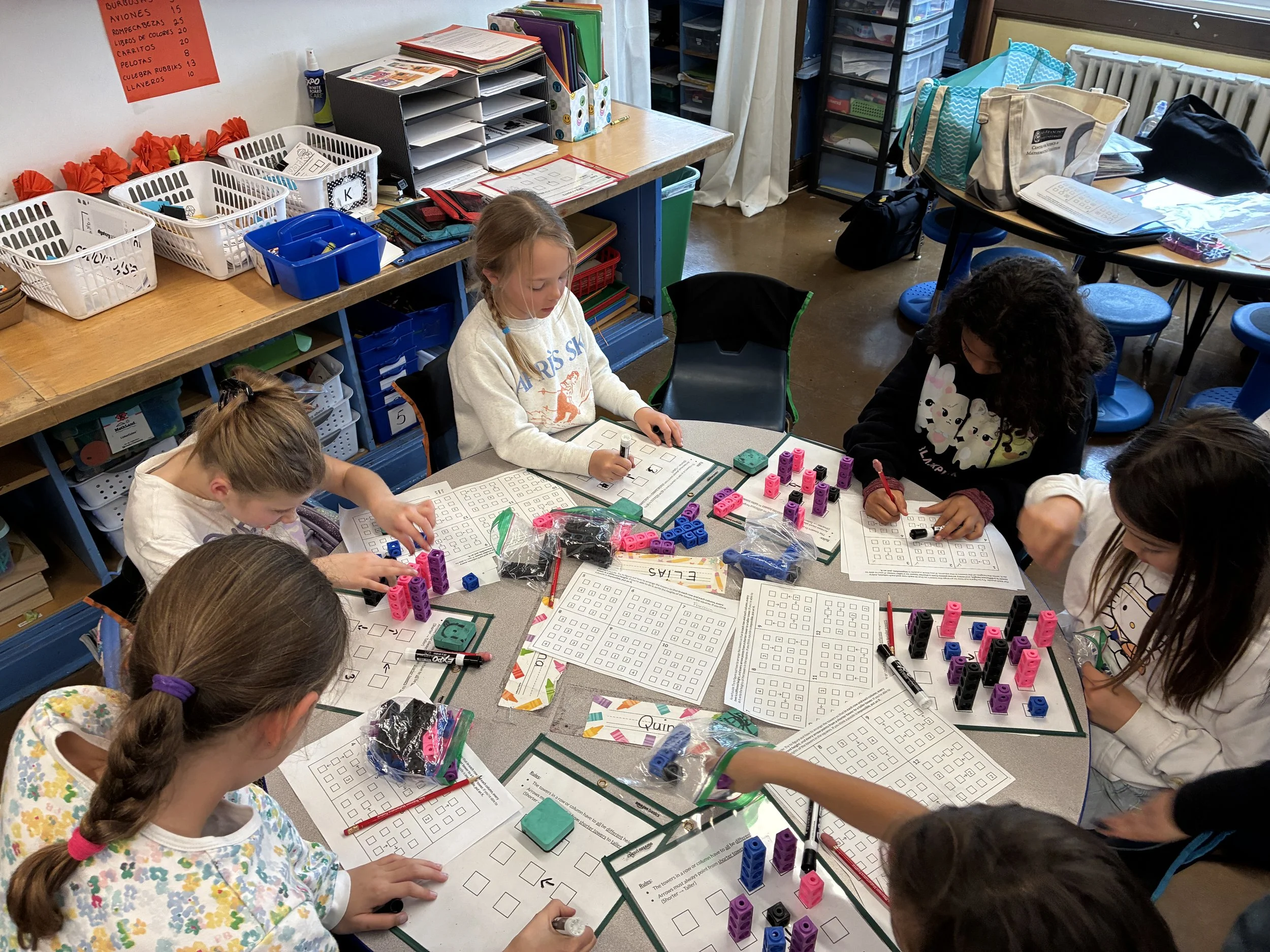
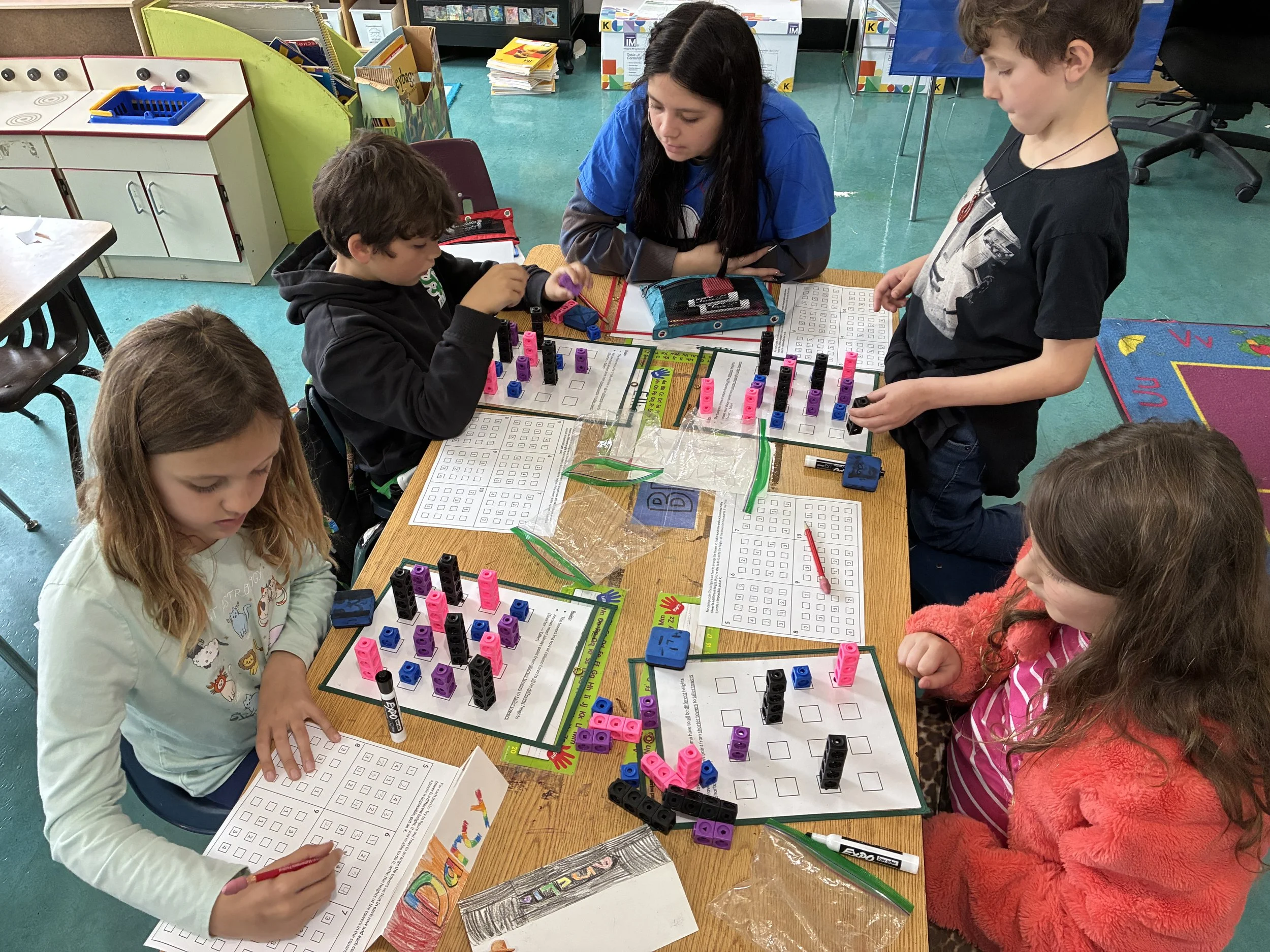
Imagine that you have a set of towers:
- 3 that are 1 unit tall
- 3 that are 2 units tall
- 3 that are 3 units tall
Your goal is to arrange these 9 towers in a 3 x 3 grid so that for each row, all the towers in that row are different heights (and likewise for columns). To make things more interesting, there may be some additional requirements as well: For example, it might be required that the tower in a specific location must be a certain height, or that the tower in a specific location must be taller or shorter than one of its neighbors.
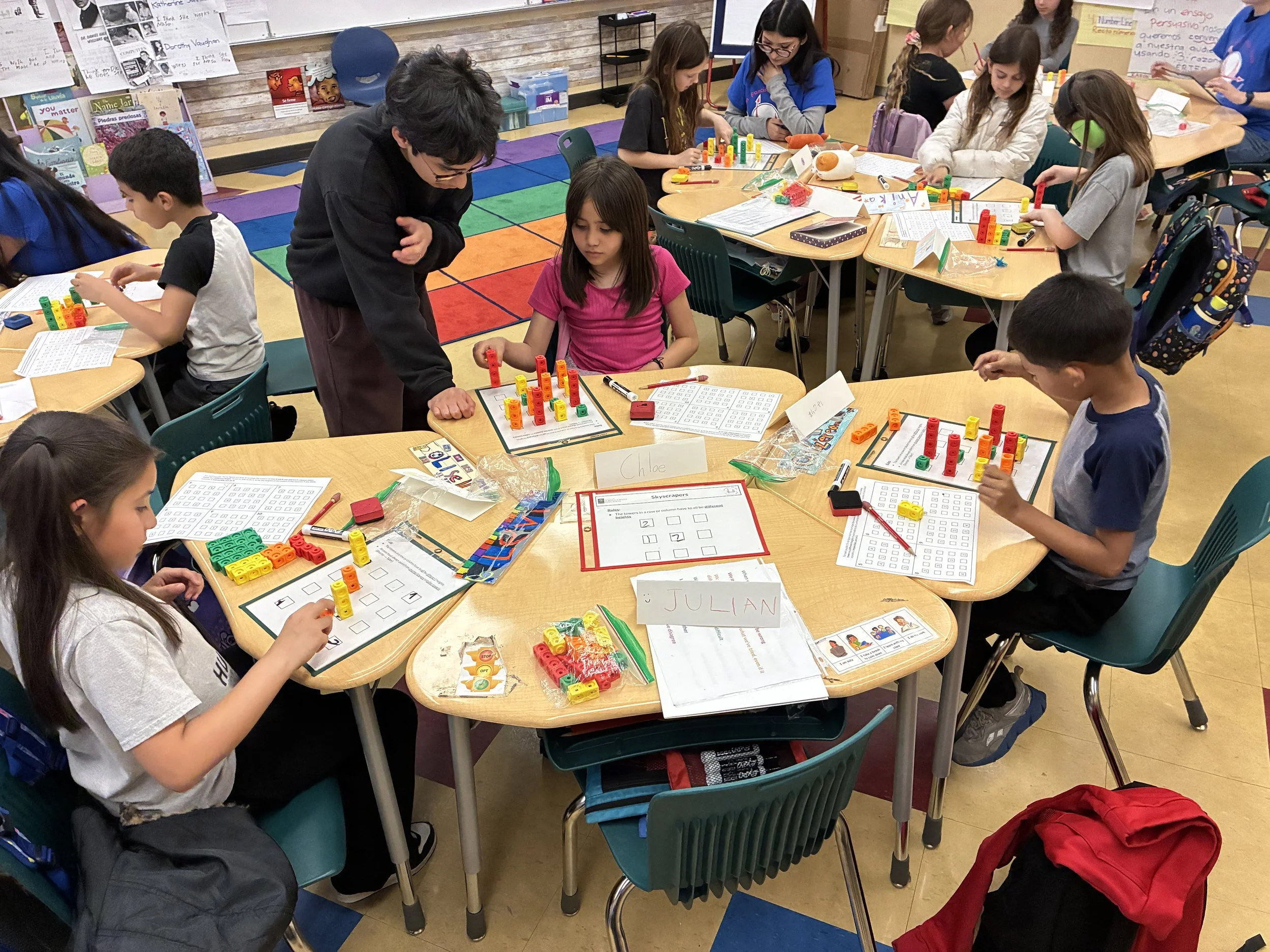
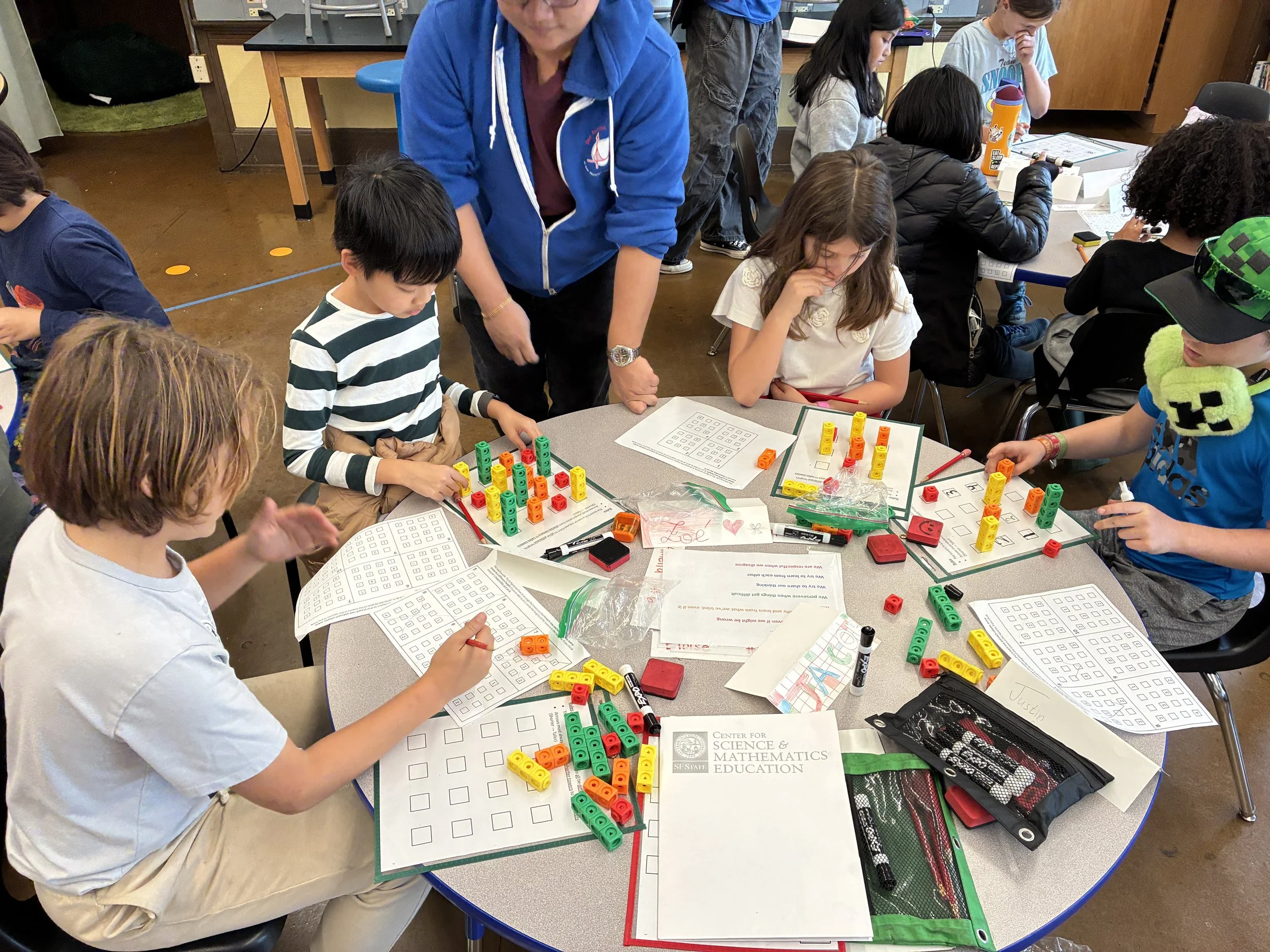
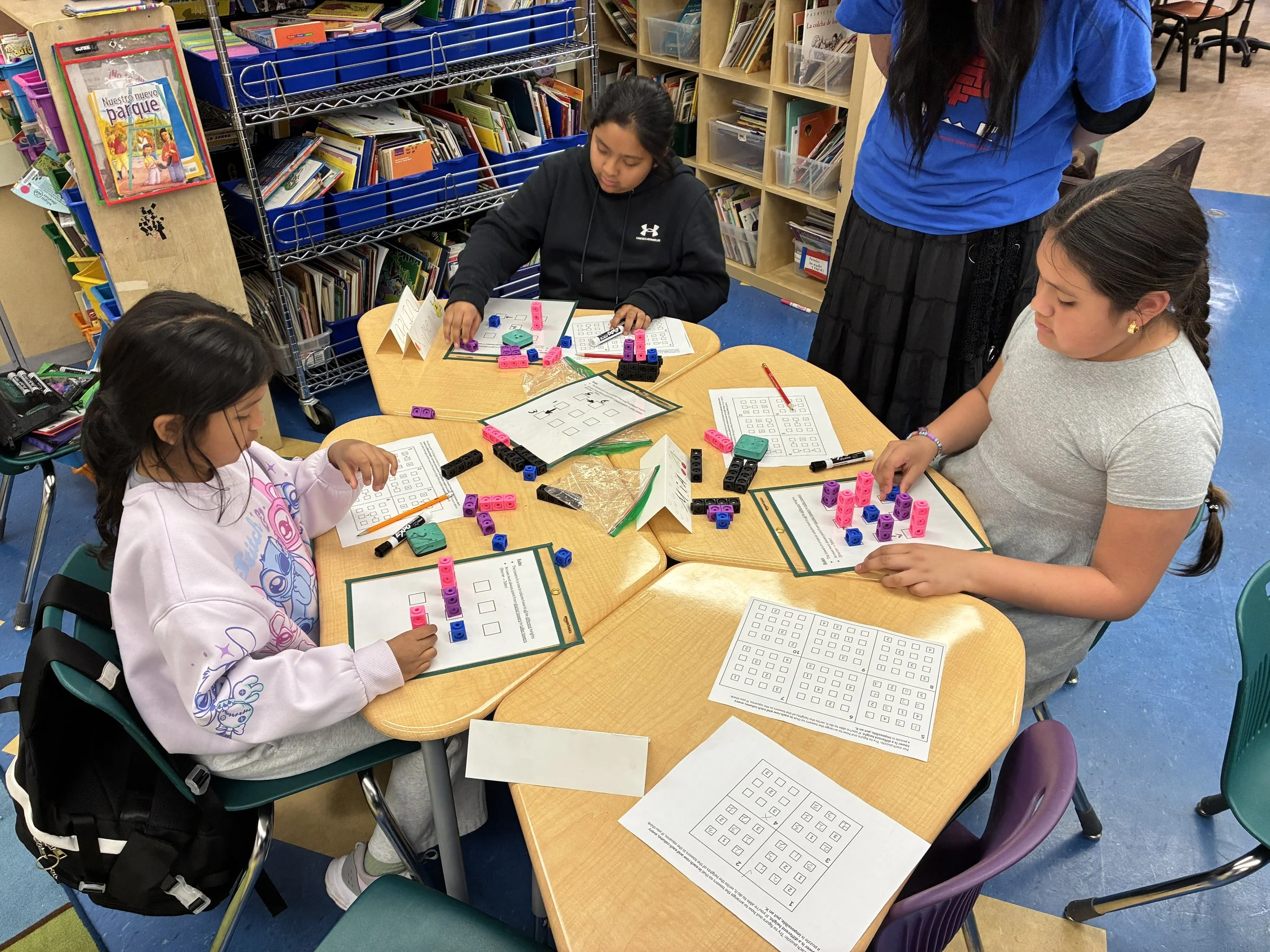
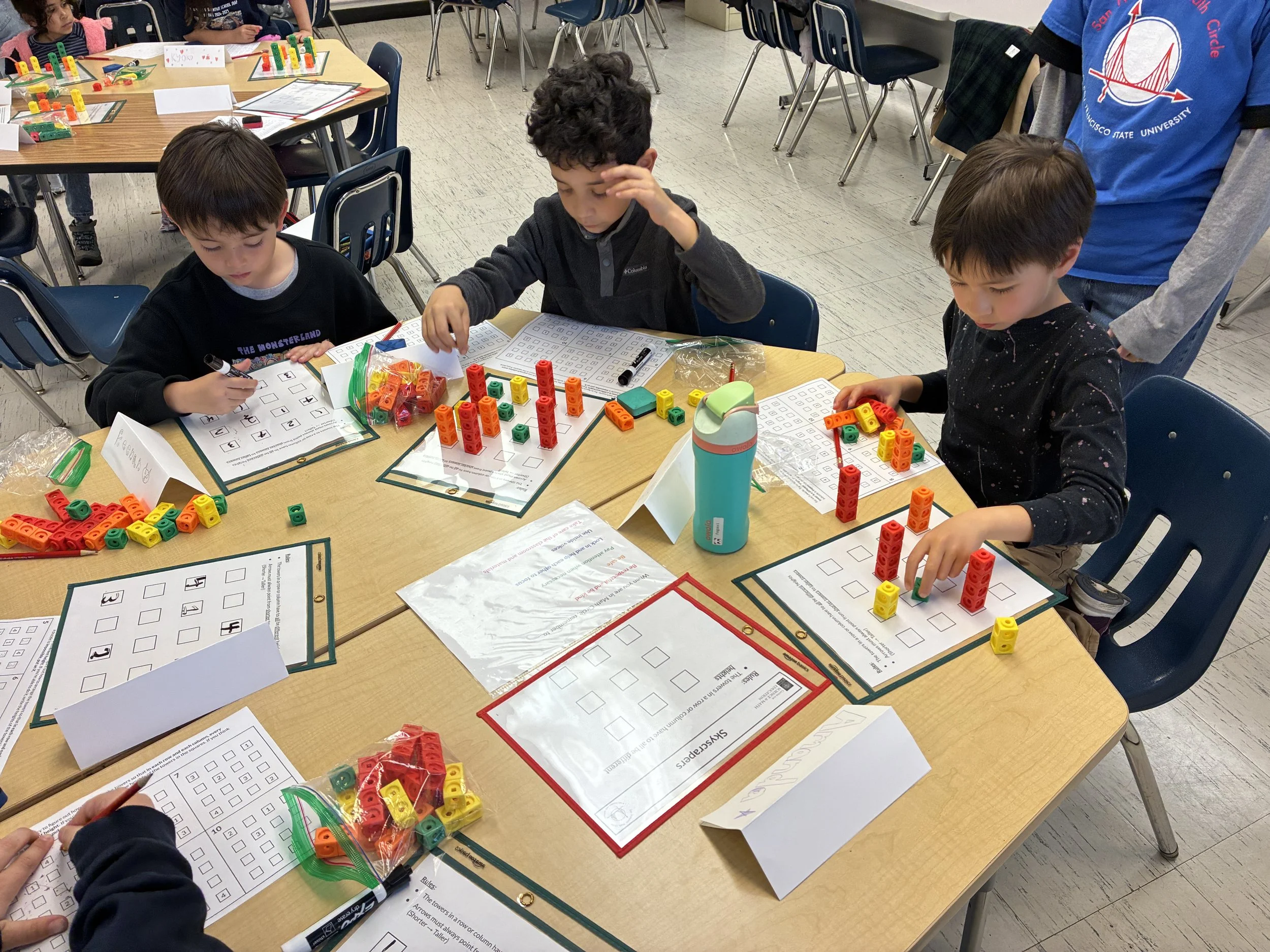
In this activity, students explore a variety of logic puzzles based on these rules. Some of these puzzles are possible, and some are impossible! Students explore puzzles on both 3 x 3 grids and 4 x 4 grids — on a 4 x 4 grid, there are four 1-unit towers, four 2-unit towers, four 3-unit towers, and four 4-unit towers — and the puzzles become increasingly challenging.
Taller-Shorter Puzzles handout
Why we like this activity
It's fun! Students enjoy placing the towers and trying to solve the puzzles.
It helps students to develop logical reasoning.
It requires students to engage in mathematical habits of mind:
Using logic and finding and using strategies to solve puzzles efficiently (without guessing)
Using logic and understanding and explaining when trying to determine when a puzzle is impossible
It has a low floor and a high ceiling: Students can start solving puzzles by trial and error, but as the puzzles get more challenging, more careful strategizing is required!
This activity was adapted from puzzles from the Julia Robinson Mathematics festival and BrainBashers.